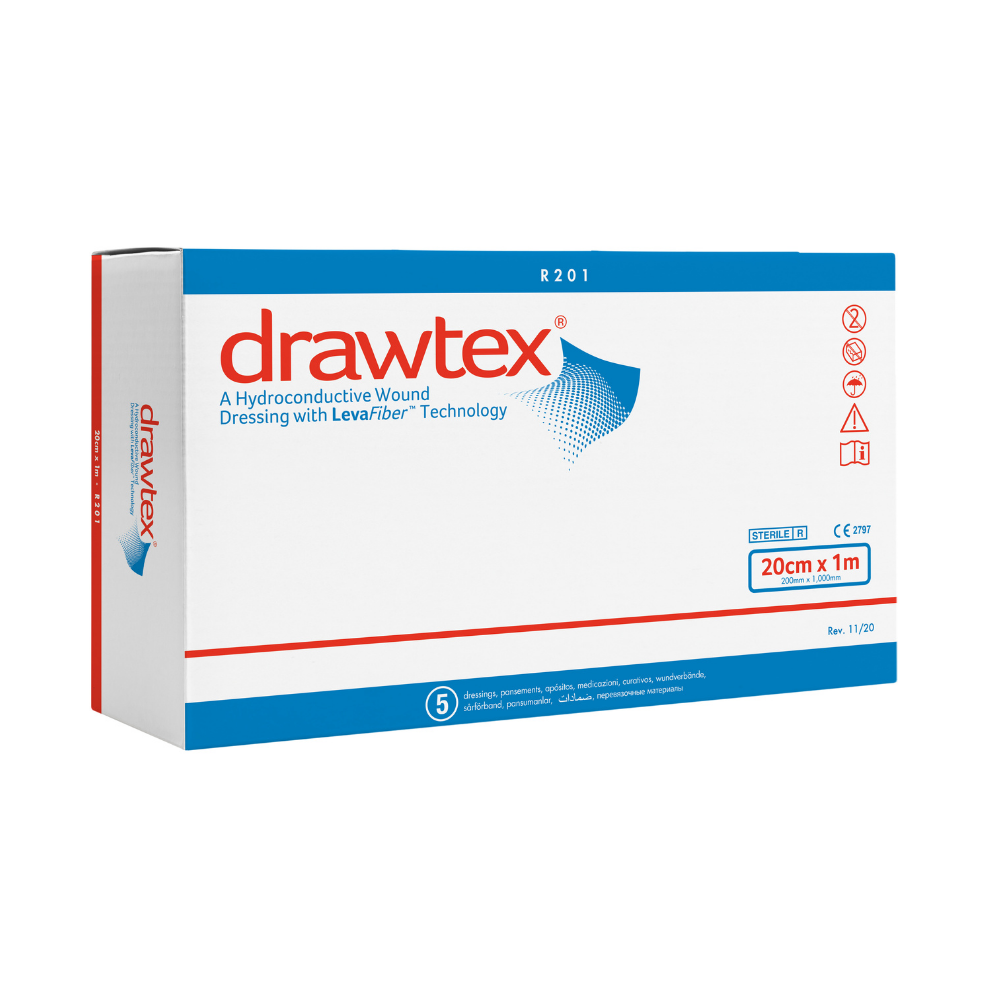
Wound bed preparation is the management of a wound in order to accelerate endogenous healing or to facilitate the effectiveness of other therapeutic measures. 2
Recent data shows how wound treatment with Drawtex® meets the complex challenges of wound bed preparation, as described below. 3
Facilitates removal of devitalised tissue
Using an advanced pattern recognition software algorithm to analyse digital wound images, researchers calculated wound measurements and analysed tissue composition of the wound bed. They found that:
- Drawtex® actively draws fluid away from the wound at a rate of up to 150 cc/hour, retaining its integrity when moist. 4
- Drawtex® helps to selectively remove debris from the wound by drawing out adherent fibrin and slough, while leaving healthy granulation tissue in place. 4
Decreases excessive wound exudate
Another study concluded that the advantages of exudate removal by Drawtex® were numerous. Not only was the fluid removed, but nutrients in the exudate that facilitate biofilm production were also drawn off. 5
Decreases the tissue bacterial level
A study that evaluated Drawtex® in an infected burn model demonstrated that the dressing can draw methicillin-resistant staphylococcus aureus (MRSA) from either an inoculated broth or an experimental burn wound eschar. 6
Similar results were reported in patients with chronic wounds, where tissue biopsy bacterial counts decreased from 106 to 102 CFUs per gram of tissue, while at the same time the bacterial counts in the Drawtex® dressings increased up to 104 CFUs. 7
Removes harmful MMPs
Chronic wounds have excessive inflammation, increased pro-inflammatory cytokines, increased proteases such as MMPs, and decreased growth factors.
Removing or decreasing the harmful MMPs is an important aspect of wound bed preparation.
One study reported that Drawtex® could draw MMP-9 and transport it up to 7cm from the wound. 11
Another similar study showed that both MMP-9 and MMP-1 were drawn out of chronic wounds with Drawtex® wound dressings, with a concomitant rise in MMPs in the dressings themselves. 7
Sets the stage for endogenous healing or wound closure procedures
With Drawtex® meeting the goals listed above for wound bed preparation, obstacles to endogenous wound healing or wound closure procedures are lessened or removed.